Comic books can develop fading, bends, brittle pages, rust, and moisture damage when storage conditions work against the paper. Learning how to store comic books without damaging a collection gives collectors a practical way to protect both reading copies and higher-value issues. Proper comic book storage involves bags, backing boards, boxes, climate control, handling habits, shelving, and periodic inspections. Small choices made now can prevent damage that may be impossible to reverse years later.
- Protect paper from heat and moisture.
- Limit exposure to light.
- Support covers and spines.
- Inspect collections over time.
Comic Book Storage Basics
Collectors often learn that storage problems develop slowly, which makes prevention easier than repair. A collection that once spent several years in a garage, for example, may show page waviness or staple corrosion even though every issue was bagged. The Library of Congress comic preservation guidance explains that many comic books contain acidic wood-pulp paper and recommends controlled storage, limited light, and supportive enclosures.
- Choose a climate-controlled room.
- Keep boxes away from plumbing.
- Use enclosures that support each issue.
- Avoid food near stored collections.
- Check storage areas throughout the year.
Choose Comic Bags
Protective sleeves create a barrier against fingerprints, dust, abrasion, and handling wear. Polyethylene and polypropylene bags are common choices for everyday comic books, while polyester film such as Mylar is often chosen for books expected to remain stored for long periods. The Library of Congress recognizes polyester film sleeves as a preservation enclosure but cautions that static charge can affect paper that has become brittle.
- Replace torn or cloudy sleeves.
- Match the bag to the issue dimensions.
- Keep tape away from the cover.
- Use extra care around fragile paper.
Use Backing Boards
Backing boards help comic books resist bends while they are moved, browsed, or placed inside boxes. Collectors should look for acid-free or lignin-free materials rather than scraps of cardboard that may introduce unwanted compounds beside the paper. Library of Congress preservation guidance recommends supportive enclosures made from materials such as acid-free folders, neutral-pH boxes, and suitable buffered products.
- Use boards sized for the bag.
- Replace warped boards.
- Do not force thick issues into tight sleeves.
Match Comic Sizes
Comic books from different publishing periods do not share one universal dimension. Golden Age, Silver Age, Bronze Age, and Current Age books may require different bags and boards, and forcing an oversized issue into a narrow sleeve can stress corners or produce spine pressure. Collectors dealing with annuals, magazines, treasury editions, or unfamiliar formats should measure the book before choosing an enclosure.
- Current issues need matching supplies.
- Silver Age books often need more width.
- Golden Age issues may require larger sleeves.
- Oversized formats need separate housing.
Choose Comic Boxes
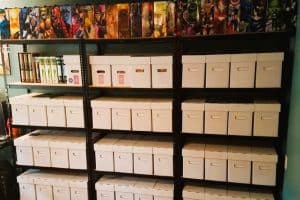
Short boxes and long boxes both work when they support comic books without crushing them. Short boxes are easier to lift, while long boxes hold more issues but become heavy once filled, and either style should leave enough room for a collector to remove a book without pulling against neighboring covers. Books should remain supported instead of leaning at angles that place pressure on spines.
- Leave browsing room inside each box.
- Add dividers to incomplete rows.
- Avoid packing issues under pressure.
- Replace boxes showing structural weakness.
- Label the box rather than the comic.
Control Storage Temperature
Heat speeds chemical deterioration in paper, so climate conditions matter even when comic books are already bagged and boxed. The Library of Congress book storage guide recommends temperatures of 70 degrees Fahrenheit or below and advises against garages, attics, vents, radiators, and places with repeated temperature swings. Consistency matters because temperature changes can also affect moisture levels.
- Avoid hot attics.
- Skip unconditioned garages.
- Keep boxes away from HVAC vents.
- Favor an interior living space.
Manage Comic Humidity
Moisture can warp pages, encourage mold, and contribute to corrosion around staples. The Library of Congress recommends about 35% relative humidity specifically for comic books, while its broader book-care guidance describes 30% to 55% as a safe range for most books. A hygrometer gives collectors a simple way to monitor the room instead of guessing about humidity.
- Monitor relative humidity.
- Watch for seasonal changes.
- Investigate musty odors.
- Do not seal damp books in plastic.
- Address water sources before returning boxes.

Avoid Direct Sunlight
Light exposure can fade inks and covers even if comic books remain behind plastic. Library of Congress preservation specialists recommend minimal light exposure and no direct or intense light for comic collections. Displayed books need more planning than boxed copies because windows, lamps, and prolonged illumination can change their appearance over time.
- Keep boxes away from windows.
- Limit display duration.
- Use cases that reduce UV exposure.
Store Boxes Safely
Comic boxes should sit on shelving rather than directly against a floor where plumbing leaks, stormwater, or household spills may reach them first. The Library of Congress storage guidance advises collectors to avoid basements and other areas with elevated flood or leak risk, while warning that plastic bins cannot compensate for damaging environmental conditions. Shelving should support the combined weight without bowing.
- Raise collections above floor level.
- Use shelves with suitable weight ratings.
- Avoid unstable box towers.
- Leave space to inspect walls and plumbing.
Handle Comics Carefully
Clean, dry hands and a clear work surface reduce many handling problems. The Library of Congress advises keeping food and drinks away, never folding a cover back on itself, and avoiding paper clips, rubber bands, tape, glue, and dog-eared pages when handling comic books. Collectors should support the book while reading rather than grabbing a corner or forcing the spine open.
- Wash and dry hands first.
- Support the entire book.
- Keep drinks off the table.
- Never attach tape to pages.
- Avoid opening a book past 180 degrees.
Protect Graded Comics
Encapsulation helps protect graded comic books from handling damage, but the holder does not remove the need for climate control. CGC recommends keeping certified books in a dark, dry, cool, temperature-controlled setting and minimizing exposure to humidity, heat, vibration, and light. CGC also explains that its holder is not airtight so acidic molecules released by the book are not trapped inside.
- Store slabs where temperatures remain controlled.
- Shield cases from sunlight.
- Avoid locations with vibration.
- Inspect holders for cracks.
Prevent Water Damage
Water can stain paper, swell fibers, create page adhesion, and trigger mold growth. The Library of Congress storage FAQ warns that plastic containers placed in humid spaces can increase mold risk when moisture becomes trapped, so a sealed bin is not a substitute for choosing a dry room. Collectors finding wet comic books should address the source before putting anything back into storage.
- Keep boxes off concrete floors.
- Check roofs and plumbing for leaks.
- Never seal moisture inside a container.
- Separate affected books from the collection.
- Seek conservation help for severe damage.
Watch For Pests
Dust, food residue, and moisture can make a storage room more appealing to insects and rodents. Library of Congress guidance recommends regular housekeeping because dust can absorb moisture, discolor materials, and attract pests. Comic books stored for years should be checked rather than placed in a room and forgotten.
- Keep storage rooms free of food.
- Look for insect debris.
- Inspect cardboard boxes.
- Clean shelves on a schedule.
Avoid Storage Mistakes
Collectors sometimes create damage while trying to protect a collection, especially when comic books are packed too tightly, placed in undersized bags, or stacked beneath excessive weight. Rubber bands can cut into paper, adhesive tape can stain surfaces, and direct contact with non-preservation cardboard may create problems during extended storage. Preventive care costs less than repairing a book once paper or cover material has been harmed.
- Do not wrap comics with rubber bands.
- Avoid tall stacks of raw books.
- Keep adhesive labels off covers.
- Never force books into undersized supplies.
- Do not store collections beside heaters.
Inspect Comic Collections
Routine inspections give collectors a chance to find trouble before it spreads through several boxes. Checks can include sleeve condition, staple rust, page waviness, mold, pest activity, odors, box damage, and room humidity, and this is also a useful time to update an inventory. A collection does not need constant handling, but years without inspection can allow a minor leak or pest problem to become expensive.
- Check bags for brittleness.
- Look for page distortion.
- Inspect staples for corrosion.
- Record changes in condition.
Long Term Storage
Long-term preservation works best when several simple protections operate together. Comic books benefit from supportive enclosures, climate control, limited light, careful handling, raised shelving, and inspections, while expensive equipment cannot compensate for a damp basement or hot attic. The Library of Congress describes preventive storage and handling as among the most effective and economical ways to preserve a comic collection.
- Prioritize the storage environment.
- Use suitable bags and boards.
- Keep each issue supported.
- Review storage conditions over time.
- Document higher-value books.

Comic Storage Key Takeaways
Protecting comic books is less about finding one special container and more about controlling the risks that damage paper over time. Bags and boards defend against handling wear, boxes provide support, climate control limits deterioration, and shelving helps reduce exposure to water, while regular checks catch changes before they spread. Collectors who combine these steps create a preservation system that works for reading copies, vintage keys, raw books, and graded issues alike.
- Keep comic books cool and dry.
- Limit exposure to light.
- Use correctly sized enclosures.
- Store boxes above floor level.
- Inspect the collection periodically.
FAQs
Should Comics Lay Flat?
Small numbers of comic books can lie flat when fully supported, but tall stacks can create pressure and handling problems. Upright box storage with dividers works better for most collections.
How Often Replace Bags?
Replace comic bags when they become cloudy, brittle, torn, or distorted. Mylar and other polyester sleeves can last much longer under suitable storage conditions.
Can Comics Use Plastic?
Yes, when the material is suitable for collection storage. Polyester, polyethylene, and polypropylene are common choices, while household plastic bags should be avoided.
Are Attics Safe?
Most attics are poor storage areas because heat and humidity can fluctuate sharply. A climate-controlled interior room is a safer choice for comic books.
Can Comics Get Mold?
Yes. High humidity and water exposure can promote mold growth, so affected comic books should be isolated and the moisture source corrected before storage resumes.