The rarest Spider-Man comic books become harder to define once condition, restoration, grading populations, surviving copies, and collector demand enter the picture. Spider-Man debuted in Amazing Fantasy #15 in 1962, and the Library of Congress preserves original Steve Ditko artwork connected with that landmark story. The rarest Spider-Man comic books discussed here include Peter Parker’s debut, the beginning of his solo series, and several issues containing first appearances of villains who became central to Marvel history. Census figures, auction records, publication dates, and physical preservation all help explain why certain copies are much scarcer than others.
- Rarity and market value measure different things.
- Condition can reduce the available population sharply.
- Restoration status changes meaningful comparisons.
- CGC census figures can rise as more comics are submitted.
Rarest Spider-Man Comics
Collectors researching the rarest Spider-Man comic books usually start by checking grading populations and then comparing how many copies survive at each grade. A useful hands-on example occurs when one issue has several thousand certified copies but only a few dozen near the top of the grading scale, making those premium examples much tougher to acquire than the headline population suggests. CGC explains that its Population Report records collectibles it has graded but cautions that the census should not be treated by itself as a direct measure of rarity or value. Ungraded books, restored copies, resubmissions, and comics certified by other companies can all change the broader picture.
- Check total certified populations first.
- Compare how copies are distributed by grade.
- Separate Universal labels from restored examples.
- Review completed sales from comparable conditions.
- Expect census numbers to change over time.
1. Amazing Fantasy 15
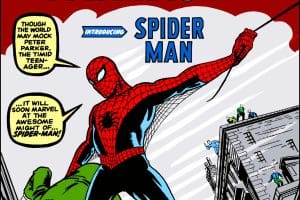
Amazing Fantasy #15 is the foundation of Spider-Man collecting because it introduced Peter Parker and Spider-Man in 1962. CGC reported in 2026 that 4,182 examples appeared in its Population Report, yet scarcity rises dramatically at the stronger end of the scale. Earlier CGC figures showed only 25 Universal copies at 8.0 and just 39 graded higher when that count was published in 2024. A CGC 9.6 copy sold for $3.6 million in 2021, showing why upper-grade examples belong among the rarest Spider-Man comic books even though thousands of lower-grade copies have been certified.
- Spider-Man makes his first appearance.
- Peter Parker, Uncle Ben, and Aunt May are introduced.
- CGC reported 4,182 graded copies in 2026.
- High-grade examples account for a small share of that census.

2. Amazing Spider-Man 1
Amazing Spider-Man #1 launched Peter Parker’s solo series in 1963 after his debut in Amazing Fantasy #15 proved popular with readers. CGC reported more than 4,700 graded copies in early 2024, yet only two carried a Universal 9.8 grade and none had been graded higher, creating an extreme shortage at the top end. One Curator pedigree CGC 9.8 copy sold through Heritage for $1.38 million in January 2024. The issue also features the Fantastic Four and introduces the Chameleon, giving collectors several reasons to pursue strong copies.
- Spider-Man begins his solo comic series.
- The Chameleon makes his debut.
- Only two Universal CGC 9.8 copies were cited in 2024.
- No copy ranked above 9.8 in that population count.
3. Amazing Spider-Man 2
Amazing Spider-Man #2 arrived in 1963 and introduced the Vulture, one of Spider-Man’s earliest recurring enemies. A CGC 9.6 copy sold for $168,000 during a Heritage auction in September 2021, while lower-grade examples have traded for far less. That gap demonstrates why the rarest Spider-Man comic books should be compared grade by grade rather than by issue number alone. The Tinkerer also makes his first appearance, adding another debut to an already important issue.
- The Vulture debuts.
- The Tinkerer also appears for the first time.
- A CGC 9.6 copy sold for $168,000.
- Condition changes the available pool considerably.
4. Amazing Spider-Man 3
Amazing Spider-Man #3 introduced Doctor Octopus, a villain who would become one of Peter Parker’s most enduring adversaries. A CGC 9.6 example sold for $50,000 in a 2024 ComicConnect auction reported by CGC, while copies in middle grades trade at much lower levels. Collectors looking for premium examples must find books with sharp corners, minimal spine wear, strong cover color, and clean interior pages, which becomes difficult after more than six decades. Those physical requirements reduce the supply dramatically.
- Doctor Octopus makes his first appearance.
- Steve Ditko provided the cover and story art.
- A CGC 9.6 example realized $50,000.
- Surface and spine condition influence grade scarcity.
5. Amazing Spider-Man 4
Amazing Spider-Man #4 introduced Sandman and contains an early appearance of Betty Brant. The issue moved into a much higher price tier when a CGC 9.6 copy sold for $174,000 during Heritage’s 2021 sale, a result reported by CGC. Heritage records show copies in grades such as 4.0, 6.5, 7.5, and 9.0 selling for far less, making the condition premium easy to see. Finding a complete copy is one task, finding one with nearly untouched corners and surfaces is far tougher.
- Sandman makes his debut.
- A CGC 9.6 copy reached $174,000.
- Lower-grade copies are easier to locate.
- Upper-grade scarcity drives the largest premiums.

6. Amazing Spider-Man 9
Amazing Spider-Man #9 introduced Electro in 1964 and becomes especially scarce at the highest end of the grading scale. Heritage records a $132,000 sale for a CGC 9.8 copy in September 2021. Steve Ditko handled both the cover and story artwork, tying the issue directly to Spider-Man’s earliest creative period. Collectors searching for the rarest Spider-Man comic books also pay attention to page color because white-page copies create an even narrower group of possible comparables.
- Electro debuts in issue #9.
- The record Heritage copy graded CGC 9.8.
- That specimen sold for $132,000.
- Page quality can further reduce available choices.
7. Amazing Spider-Man 14
Amazing Spider-Man #14 introduced the Green Goblin, whose identity and connection to Peter Parker would shape Spider-Man stories for decades. High-grade examples appear far less often than lower-grade copies, and collectors continue to compete for strong specimens carrying Steve Ditko’s original artwork. The 1964 publication date places the issue close to the beginning of Spider-Man’s solo run, while Norman Osborn’s later importance gives the book lasting demand. Original copies should also be distinguished from later reprints and reproductions that reuse the cover or story.
- The Green Goblin makes his first appearance.
- The issue was published in 1964.
- Steve Ditko created the artwork.
- Collectors should verify original-print details carefully.
8. Amazing Spider-Man 50
Amazing Spider-Man #50 is remembered for the Kingpin’s debut and John Romita Sr.’s “Spider-Man No More!” cover. CGC reported in 2026 that more than 8,700 examples appeared in its population data, yet only about 1% were graded higher than the 9.2 copy discussed in one auction preview. That statistic shows why total population alone can create a misleading picture when collectors discuss the rarest Spider-Man comic books. ComicLink sold a CGC 9.8 example for $125,000 in 2024, while Heritage records another 9.8 sale at $99,000.
- Kingpin makes his debut.
- More than 8,700 copies were CGC graded.
- Only about 1% exceeded 9.2 in the cited count.
- CGC 9.8 copies have reached six figures.
9. Amazing Spider-Man 121
Amazing Spider-Man #121 contains the death of Gwen Stacy, a story that changed Peter Parker’s life and became one of Marvel’s most discussed Bronze Age events. Heritage recorded a $9,300 sale for a CGC 9.8 copy in 2021, while strong examples continue to attract collectors who focus on major story milestones. More copies survived from 1973 than from Spider-Man’s earliest years, yet high-grade specimens with clean covers and sharp edges still represent a smaller part of the market. Story significance keeps demand concentrated on the best-preserved examples.
- Gwen Stacy dies in the issue.
- The Green Goblin battles Spider-Man.
- John Romita Sr. created the cover art.
- Top-grade copies remain harder to secure.
10. Amazing Spider-Man 129
Amazing Spider-Man #129 introduced the Punisher and the Jackal in 1974, making it one of the most pursued Bronze Age Spider-Man issues. Heritage records show CGC 9.8 examples selling for roughly $14,000 to $16,500 during several 2026 auctions, while lower-grade copies trade at much smaller amounts. The issue is not scarce in every condition, so its place among the rarest Spider-Man comic books centers on the challenge of finding elite-grade specimens with strong eye appeal. That distinction helps collectors avoid confusing popularity with true scarcity.
- The Punisher makes his first appearance.
- The Jackal also debuts.
- CGC 9.8 copies exceeded $16,000 in 2026.
- High-grade rarity differs from total survival rarity.

Spider-Man Rarity Factors
The rarest Spider-Man comic books demonstrate why publication date alone cannot determine scarcity. CGC grades comics on a scale reaching 10, while label category, page color, restoration, pedigree, completeness, and certified population give collectors more context. The CGC Population Report cautions that its numbers should not be treated as a direct indicator of value or absolute rarity because ungraded copies remain outside the census. A stronger assessment combines population data with completed sales, publishing history, restoration information, and known high-grade examples.
- Certification counts cover graded copies only.
- Raw comics remain outside population reports.
- Restored examples require separate comparisons.
- Grade distribution can matter more than total census size.
- Pedigree status may affect collector demand.
Protecting Rare Comics
Rare comics require careful storage because paper, staples, covers, and printing inks can deteriorate when exposed to poor environmental conditions. The Library of Congress preservation guidance recommends protecting paper materials from excess light, moisture, pollutants, pests, and physical stress. Collectors buying the rarest Spider-Man comic books online can also follow Federal Trade Commission marketplace guidance by researching sellers, checking actual-item photographs, reviewing return policies, and choosing payment methods that provide buyer protections. Keeping purchase records and certification details creates a clearer ownership trail later.
- Limit exposure to direct sunlight.
- Keep moisture away from stored comics.
- Retain invoices and grading records.
- Research sellers before sending payment.
- Verify certification numbers on expensive books.
Rarest Spider-Man Takeaways
The rarest Spider-Man comic books reveal two distinct types of scarcity. Amazing Fantasy #15 and Amazing Spider-Man #1 combine age with tiny populations near the highest grades, while later issues such as Amazing Spider-Man #50, #121, and #129 may survive in larger numbers but become much harder to obtain once collectors require elite condition. First appearances create demand, yet a popular debut does not automatically make every copy rare. The clearest evaluation considers the exact issue, grade, label, page quality, census date, restoration status, and completed sale history together.
- Amazing Fantasy #15 introduced Spider-Man in 1962.
- Amazing Spider-Man #1 has only two cited CGC 9.8 Universal copies.
- High-grade scarcity can differ sharply from total scarcity.
- CGC population numbers change as submissions increase.
- Rarity does not automatically determine market value.
FAQs
What Spider-Man Comic Is Rarest?
Amazing Fantasy #15 remains one of the strongest candidates when historic importance and high-grade scarcity are considered together. Thousands of copies have been certified, but only a small percentage reach the upper end of the grading scale. The $3.6 million sale of a CGC 9.6 example demonstrates how difficult those grades are to obtain and how strongly collectors compete when one becomes available.
Is Spider-Man 1 Rare?
Amazing Spider-Man #1 becomes extremely scarce in near-perfect condition. CGC reported more than 4,700 graded copies in 2024 but only two Universal examples at 9.8, with no copies graded above that level. The Curator pedigree 9.8 sold for $1.38 million, illustrating how dramatically scarcity increases near the top of the scale.
Does Grade Affect Rarity?
Grade can change the practical rarity of a comic considerably. An issue might have thousands of surviving copies while only a few dozen meet a demanding condition standard. Collectors should compare populations within the same grade, label category, and page-quality range rather than treating every surviving example as interchangeable.
Are Reprints Rare?
Some Spider-Man reprints and variants can be scarce, but they should not be confused with the original issues discussed here. Publication dates, cover prices, indicia information, printing details, and grading labels can help identify the correct edition. Collector demand can differ dramatically between an original first printing and a later reproduction of the same story.
Does Census Equal Rarity?
CGC states that its population data reflects items previously graded by the company and should not be treated as a direct measure of rarity or value. Ungraded copies, resubmissions, restored specimens, and comics certified by competing grading services all affect the wider supply. Collectors evaluating the rarest Spider-Man comic books gain a more accurate picture by combining census information with auction history, known surviving copies, and condition-specific sales.